
Comprehensive Guide to Modern Medical Gas Pipeline Systems in Hospitals
9/11/20268 min read

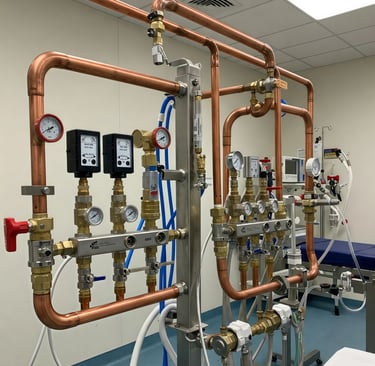
Understanding Modern Medical Gas Pipeline Systems (MGPS)
A modern medical gas pipeline system (MGPS) is a sophisticated network specifically designed for the seamless delivery of various medical gases, crucial for patient treatment and safety in healthcare settings such as hospitals. This system encompasses an array of components, including pipelines, connectors, regulators, alarms, and safety devices, all ensuring that gases like oxygen, medical air, and vacuum are transported efficiently and reliably.
The primary purpose of an MGPS is to provide immediate access to essential gases that support patient care. For instance, oxygen is vital for respiratory treatments, while medical air is used for various applications, including powering ventilators and anesthesia equipment. Vacuum systems play a critical role by removing gases and fluids in surgical environments, which is essential for maintaining a sterile and safe atmosphere. Each of these components works in synergy to create a dependable and efficient system that healthcare professionals rely upon during their daily operations.
The significance of modern MGPS in hospitals cannot be overstated. These systems contribute significantly to patient outcomes by ensuring that medical gases are available on demand, reducing the risk of delays in treatment. Furthermore, an MGPS enhances operational safety by incorporating monitoring devices that continuously check gas levels and pressures, promptly alerting staff to any anomalies. This proactive approach to managing medical gas availability not only supports patient care but also helps fulfill regulatory compliance, thereby promoting an overall safe environment for both patients and healthcare providers.
In essence, understanding the architecture of modern medical gas pipeline systems, their critical components, and the role they play in healthcare settings, underscores their value within the medical field. Hospitals equipped with MGPS are better positioned to deliver high-quality care, ensuring that essential gases are reliably accessible whenever needed.
Planning and Design Considerations for MGPS
The process of establishing a modern medical gas pipeline system (MGPS) in hospitals begins with thorough planning and design considerations. This phase is critical in ensuring that the system operates efficiently, safely, and complies with regulatory standards. One of the first steps involves understanding the specific needs of the healthcare facility. These needs can vary significantly depending on the size of the hospital, the types of medical services provided, and the anticipated patient load.
Regulatory compliance is a pivotal aspect of the planning process. Various standards and guidelines exist that govern the installation and operation of medical gas systems. Regulatory bodies may stipulate specific design elements that must be adhered to, ranging from the types of materials used to the installation methods. It is essential that the project team stays informed about the latest regulations to avoid costly errors and ensure the facility's accreditation.
Collaboration among healthcare project teams, architects, and mechanical, electrical, and plumbing (MEP) consultants is crucial during the design phase. Each team member brings specialized knowledge that can enhance the overall functionality and safety of the MGPS. For example, architects must consider the spatial requirements for gas storage and distribution systems, while MEP consultants can provide insights into integrating the medical gas systems with other building services and systems, such as fire safety and ventilation. This integration is vital to ensure that the MGPS operates cohesively within the hospital environment, minimizing the risk of interruptions or malfunctions.
The design of the MGPS should also include contingencies for future expansions or modifications. Planning for scalability can help accommodate the evolving needs of the healthcare facility, ensuring that the system remains effective over time. Overall, a comprehensive approach to the planning and design of MGPS is fundamental to achieving a safe and efficient medical gas supply system that supports high-quality patient care.
Installation Best Practices for Medical Gas Pipeline Systems
Installing a Medical Gas Pipeline System (MGPS) involves meticulous planning and execution to ensure safety and compliance with healthcare standards. The first step in this process is to develop a comprehensive installation plan that includes site assessments and the identification of gas supply requirements. Engaging with experienced professionals who understand the specific regulations and standards for medical gas systems is crucial to achieving optimal results.
One of the key considerations in the installation process is the routing of pipelines. It is vital to ensure that the pipelines follow a logical path that minimizes bends and obstructions while providing easy access for maintenance. Best practices dictate that all installations should adhere to local and national building codes to prevent any potential risks. Additionally, proper identification of pipelines through color coding and labeling is imperative for safety and operational efficiency.
The installation of manifolds is another essential aspect of the MGPS. Manifolds are responsible for connecting multiple gas supply lines and ensuring a continuous flow of gases to various hospital departments. Care should be taken to install these units in accessible locations that facilitate ease of maintenance and inspection. Furthermore, automatic valve shut-off units (AVSUs) must be strategically incorporated into the system design. These units provide enhanced safety by automatically shutting off gas flow in the event of a leak or emergency.
Medical gas outlets should also be installed in accordance with best practices, ensuring that they are conveniently located for healthcare professionals while maintaining compliance with safety standards. It is important to regularly review the installation process to incorporate advancements in technology and methods, adapting best practices as necessary.
Finally, it is advisable to test the entire system post-installation using appropriate leak detection methods and pressure testing to ensure it functions as intended. Following these best practices not only ensures the reliability of the medical gas pipeline system but also enhances patient safety and care standards within healthcare facilities.
Testing and Commissioning of MGPS Systems
The testing and commissioning phase is a critical component in the establishment of Medical Gas Pipeline Systems (MGPS) in hospitals. This process ensures that the systems are functioning correctly and meet the safety standards necessary for effective healthcare delivery. During this phase, various tests are conducted to verify the integrity and performance of the gas pipeline system.
One of the primary methods of testing in MGPS is pressure testing. This involves applying a predetermined pressure to the system to check for any leaks or weaknesses. By monitoring for pressure drops, technicians can swiftly identify and rectify potential issues before the system becomes operational. Pressure testing is often performed using nitrogen or another inert gas to prevent any contamination that might arise from process gases.
In addition to pressure testing, leak detection is essential for ensuring the safety of medical gas systems. This can be achieved through several techniques, including the use of ultrasonic leak detection equipment or performing a soap bubble test. Detecting leaks early is vital, as even minor leaks can lead to significant safety hazards, including the risk of fire or explosion, as well as providing inaccurate dosages of medical gases.
Contamination checks are another important aspect of testing MGPS. This involves verifying the purity of the gases being supplied through the pipeline. Gases must adhere to strict cleanliness standards, as any impurities can pose a risk to patient safety. Techniques such as gas sampling and laboratory analysis are used to ensure the gases meet the required specifications.
Moreover, documentation plays a crucial role in the testing and commissioning phase. Proper records of all tests conducted, along with their results, must be maintained. This documentation serves not only as a compliance requirement but also as a valuable resource for future maintenance and troubleshooting. Additionally, training for hospital personnel is essential to ensure they are familiar with the systems in place, understand safety protocols, and are prepared to respond efficiently in emergencies.
In conclusion, the testing and commissioning of MGPS systems are fundamental to ensuring a safe and reliable medical environment. By employing thorough testing methods, maintaining precise documentation, and providing adequate training, hospitals can safeguard the well-being of patients and staff alike.
Safety Features and Redundancy in MGPS
Medical Gas Pipeline Systems (MGPS) are crucial components in healthcare facilities, providing a reliable supply of medical gases, such as oxygen, nitrous oxide, and medical air, necessitating stringent safety measures. Essential safety features within MGPS are designed to ensure the integrity and reliability of gas delivery, safeguarding both patients and medical staff.
One of the primary safety features of MGPS is the alarm system. Alarms are strategically placed throughout the system to alert personnel to any malfunctions or deviations from normal operating parameters. These alarms can include visual indicators and audible alerts, ensuring that any issue is promptly addressed. Additionally, monitoring systems are integrated to provide continuous oversight of gas pressures and flow rates, giving real-time data that is critical for maintaining optimal performance and safety.
Emergency protocols form another essential aspect of safety in MGPS. These protocols outline the steps to be taken in the event of a system failure or unforeseen circumstance, ensuring that all staff are adequately prepared to respond swiftly and efficiently. Training medical staff on these protocols is vital to minimize risks during emergencies, thereby enhancing patient safety.
Redundancy is a key principle in the design of MGPS, which involves incorporating duplicate systems or components to ensure a continuous supply of medical gases. For instance, a facility may have multiple supply sources or backup cylinders that can automatically engage if the primary system fails. This concept of redundancy not only mitigates the risks associated with system failure but also instills confidence in healthcare providers that they can rely on the gas delivery system even under unexpected conditions.
In conclusion, the safety features and redundancy incorporated within MGPS are imperative for maintaining robust and uninterrupted medical gas delivery in hospitals. By implementing effective monitoring systems, alarms, and emergency protocols, coupled with redundancy measures, healthcare facilities can significantly reduce the likelihood of risks associated with medical gas supply failures, ultimately enhancing patient care and safety.
Addressing Future Expansion Needs in MGPS Planning
In the rapidly advancing healthcare sector, the planning of medical gas pipeline systems (MGPS) must account for potential future expansions. This necessity stems from the increasing integration of modern medical technologies and the constant evolution of healthcare services. Hospitals must consider a proactive approach when designing their MGPS to effectively accommodate future demands without necessitating extensive redesigns.
One of the key considerations in MGPS planning is the anticipation of new medical technologies. As innovations emerge, so too does the need for additional types of medical gases, necessitating a flexible design that can integrate these gases seamlessly into existing infrastructure. Therefore, a sound MGPS should not only focus on current requirements but also incorporate the capacity for future enhancements, ensuring that the system can be adapted to include new technologies as they are developed.
Moreover, the healthcare industry continuously evolves with an expanded range of services, each presenting varying gas supply needs. For instance, the introduction of new surgical techniques or specialized treatments can substantially alter the demands placed on an MGPS. Consequently, hospitals must implement a design that offers the flexibility to add new service points or modify existing ones. This adaptability will enable healthcare facilities to respond quickly to emerging trends in medical care without significant interruptions to ongoing operations.
Lastly, incorporating sustainability into the planning process can further enhance the viability of MGPS, enabling the system to efficiently manage resources while minimizing waste. A thorough assessment of both current and future needs is crucial for developing a robust MGPS that not only meets present demands but also strategically positions the hospital for long-term growth and technological advancement.
Frequently Asked Questions About Modern Medical Gas Pipeline Systems
Modern Medical Gas Pipeline Systems (MGPS) are essential components in the infrastructure of healthcare facilities, particularly hospitals. As such, they often prompt various inquiries from stakeholders, including hospital owners, architects, and project management teams. Below are some frequently asked questions designed to clarify common concerns and provide detailed insights regarding MGPS.
What are the maintenance requirements for MGPS?
Regular maintenance is crucial for the efficient operation of medical gas pipeline systems. Stakeholders should schedule routine inspections and testing to ensure that all components are functioning properly. This includes checking the gas outlets, monitoring pressure levels, and inspecting the integrity of the pipeline. Moreover, repair and maintenance activities must comply with the local healthcare regulations to maintain safety standards.
What are the compliance standards for installation?
MGPS installations must adhere to strict compliance standards set forth by relevant health authorities and organizations such as the National Fire Protection Association (NFPA) and The Joint Commission. These standards guide the design, installation, and operational aspects of the systems to ensure safety and reliability. Given the critical nature of medical gases, compliance with these standards is non-negotiable.
How much do MGPS cost?
The cost of modern medical gas pipeline systems can vary significantly based on factors such as the size of the healthcare facility, the complexity of the system, and specific design requirements. Generally, costs include the initial installation, ongoing maintenance, and potential upgrades, making it essential for project teams to incorporate these factors into their budgeting plans. Engaging with qualified professionals during the planning stages can provide accurate cost estimations.
What is the longevity of these systems?
When properly designed and maintained, MGPS can have a lifespan of 20 years or more. Regular inspections and timely maintenance play critical roles in prolonging the life of these systems. Additionally, the materials used in construction can significantly affect longevity, underscoring the importance of selecting quality components during installation.
In conclusion, understanding the frequently asked questions surrounding modern medical gas pipeline systems can facilitate better decision-making for all stakeholders involved. By addressing maintenance, compliance, cost, and longevity, hospital owners and project teams can ensure the reliability and efficiency of these vital systems.
Services
© 2024. All rights reserved.
Products

We're Making it easier to find Better Medical Devices
Find us on Map:
Contact Information
Phone: +91 9029457428 | +91 9833236604 | +91 7506374381
Email : medevices2018@gmail.com | sales@medevices.in