
From Hospital Drawing to Commissioning: Navigating the Complete MGPS Project Lifecycle
10/3/20262 min read
Defining the Clinical Requirement
Every successful medical gas pipeline system (MGPS) project begins with a clear understanding of clinical demand. The project team first identifies the healthcare services involved, including operating theatres, intensive care units, emergency departments, wards, laboratories and diagnostic areas. Each department may require different gases, outlet quantities, flow rates and levels of resilience.
At this stage, the designer reviews the hospital’s clinical brief, room data sheets and future expansion plans. Oxygen, medical air, surgical air, nitrous oxide, vacuum and other gases must be considered according to the facility’s intended use. Delays often occur when clinical requirements are incomplete or change after design work has started. Early consultation with clinicians, facilities teams and compliance specialists helps prevent costly revisions.
Design Development and MEP Coordination
Once the requirements are established, engineers develop the MGPS layout, zoning strategy, plant capacity, valve arrangements, alarm systems and outlet locations. The design must support safe operation, maintenance access and continuity of supply. It should also comply with applicable healthcare standards, local regulations and the project’s technical specifications.
Coordination with mechanical, electrical and plumbing disciplines is a critical part of this phase. Medical gas pipes compete for space with ventilation ducts, cable trays, water services, fire protection systems and structural elements. Poor coordination can lead to site clashes, redesign and installation delays. Building information models, coordinated drawings and formal design reviews reduce these risks before construction begins.
Procurement and Installation
After design approval, the project moves into procurement. Specialist equipment may include medical gas manifolds, plant systems, area valve service units, alarms, terminal units, copper pipework, fittings and identification materials. Procurement schedules should account for manufacturing times, certification requirements and inspection procedures. Late approval of technical submittals or unavailable specialist components can affect the entire construction programme.
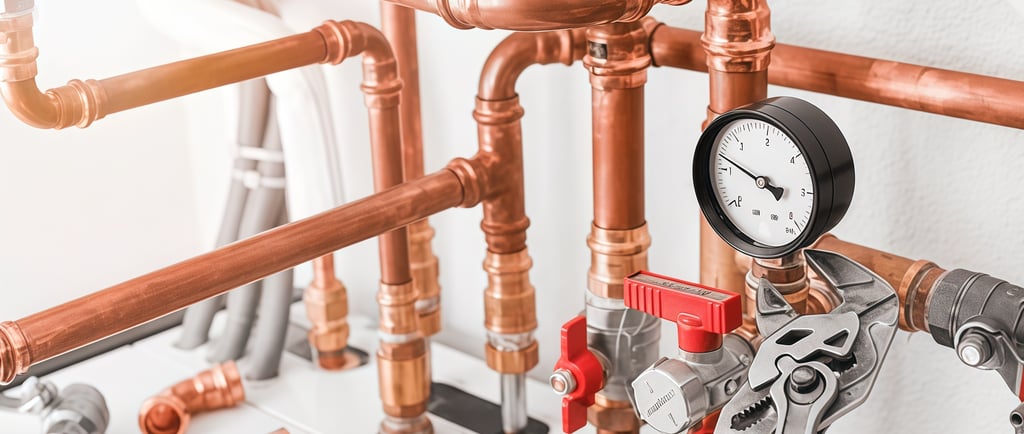
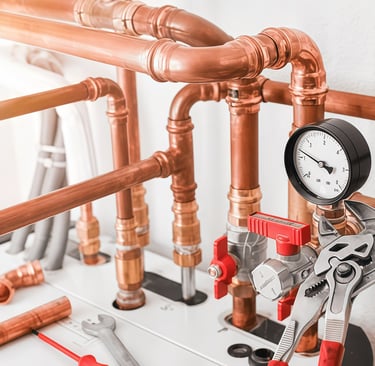
Installation is carried out by qualified personnel using controlled procedures. Pipework must be correctly sized, supported, brazed, cleaned and protected from contamination. Open pipe ends should remain sealed, and materials must be stored carefully to preserve internal cleanliness. Coordination with other contractors remains essential because inaccessible routes, ceiling closures or late architectural changes can interrupt progress.
Testing, Commissioning and Verification
Testing confirms that the system is safe, compliant and fit for clinical use. Typical activities include visual inspections, pressure testing, cross-connection testing, alarm verification, flow and performance checks, pipeline integrity testing and gas identity confirmation. Testing must be planned around construction completion and access to every relevant outlet and valve.
Common delays arise when sections are tested before other trades finish their work, when documentation is incomplete or when failed tests require concealed pipework to be reopened. A phased testing strategy, witnessed inspections and clear responsibility matrices help maintain momentum while protecting quality.
Documentation and Handover
The final stage converts a completed installation into an operational clinical asset. The handover package should include as-built drawings, test certificates, equipment manuals, commissioning records, asset registers, maintenance schedules and staff training records. Operators should understand isolation procedures, alarm responses and routine inspection requirements.
A well-managed MGPS project does not end when installation is complete. It ends when the hospital can operate the system safely, confidently and independently. Early planning, disciplined coordination and accurate records are therefore as important as the physical pipework itself.
Services
© 2024. All rights reserved.
Products

We're Making it easier to find Better Medical Devices
Find us on Map:
Contact Information
Phone: +91 9029457428 | +91 9833236604 | +91 7506374381
Email : medevices2018@gmail.com | sales@medevices.in