
Medical Gas Manifolds: Sizing, Safety and Reliable Operation
10/13/20262 min read

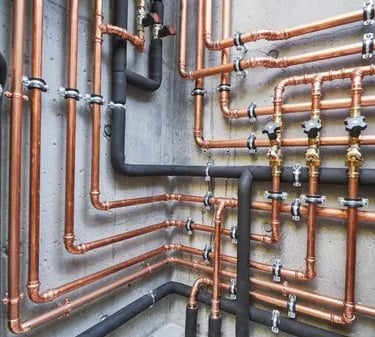
How a Medical Gas Manifold Works
A medical gas manifold supplies a healthcare facility’s pipeline from banks of compressed-gas cylinders. Rather than connecting every cylinder directly to the pipeline, the manifold regulates high cylinder pressure to a controlled downstream pressure suitable for the system. The gas, pressure range and design must match the intended service—for example, oxygen, nitrous oxide or medical air—and the facility’s engineering requirements.
Most systems use a primary bank and a secondary bank. While the primary bank supplies gas, the secondary remains available as a reserve. An automatic changeover assembly switches supply when the active bank reaches its changeover threshold. This supports continuity, but it does not remove the need for staff to replace depleted cylinders promptly and confirm the system has returned to its intended operating state. A local or remote alarm should indicate bank status and relevant pressure conditions so that responsible personnel can respond before supply is compromised.
Capacity, Reserve and Equipment Selection
Capacity is more than the number of cylinders connected. Engineers should assess peak and average demand, expected simultaneous use, cylinder size and pressure, delivery frequency, and the consequences of an interruption. The calculation should account for the gas’s usable contents under actual operating conditions, not simply the cylinder’s nominal water capacity. A suitable reserve depends on demand variability, replenishment lead time and the facility’s resilience requirements.
Selection should also consider outlet pressure and flow, regulator performance, changeover behavior, alarm interfaces, compatible materials, environmental conditions and access for cylinder replacement. Confirm that the proposed assembly is designed for the specific gas and intended application. Procurement teams should review technical submittals with the responsible medical-gas engineer and clinical stakeholders rather than choosing solely by initial price or cylinder count.
Common mistakes include undersizing the source, overlooking future demand, providing inadequate reserve, assuming automatic changeover replaces monitoring, and failing to check cylinder compatibility or alarm integration. A layout that makes banks difficult to access can also create avoidable handling and service risks.
Safe Installation and Cylinder Handling
Medical gas systems are safety-critical. Installation, alteration and testing should be performed by qualified personnel under the applicable codes, standards and local regulations. Requirements vary by jurisdiction and gas service, so the project team should identify the governing standards early and verify that components, labeling, separation, ventilation and installation details comply.
Cylinders must be secured against falling, protected from damage and handled using procedures appropriate to the gas. Keep caps in place when required, use the correct regulator and connections, and avoid oil or grease on oxygen-service equipment. Staff should be trained to identify full, in-use and empty cylinders, follow the site’s changeout procedure, and report leaks, damage or abnormal pressure indications. Cylinders should be stored and segregated according to applicable rules and manufacturer guidance.
Commissioning and Preventive Maintenance
Before service, commissioning should document that the installation matches approved drawings and operates as intended. Checks typically include leak testing, pressure and flow verification, changeover function, alarm operation, labeling and confirmation of the gas identity. The scope and acceptance criteria should follow applicable standards and the project specification. Keep test results, equipment details, certificates and any corrective actions in an accessible record.
Preventive maintenance should follow the manufacturer’s instructions, applicable requirements and a documented site schedule. Inspect regulators, valves, flexible connections, alarm devices, cylinder restraints and visible pipework; verify alarm communication and changeover operation; and investigate pressure trends or repeated supply interruptions. Record inspections, repairs, cylinder changes and test outcomes. Clear responsibility for monitoring and maintenance helps ensure the manifold remains dependable throughout its service life.
Services
© 2024. All rights reserved.
Products

We're Making it easier to find Better Medical Devices
Find us on Map:
Contact Information
Phone: +91 9029457428 | +91 9833236604 | +91 7506374381
Email : medevices2018@gmail.com | sales@medevices.in